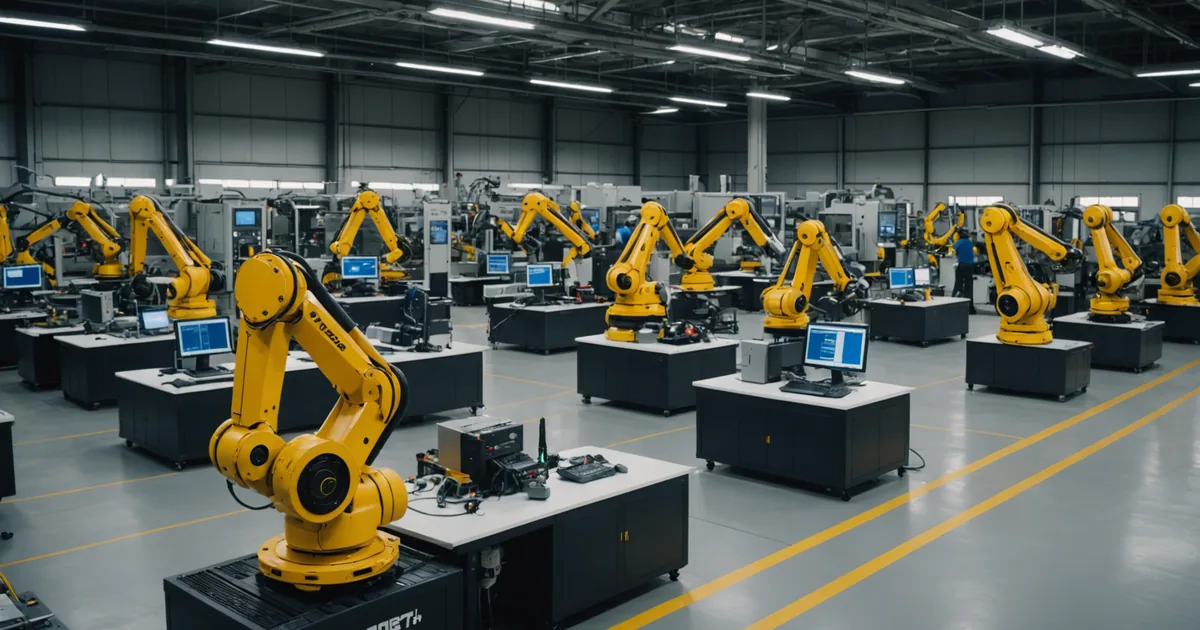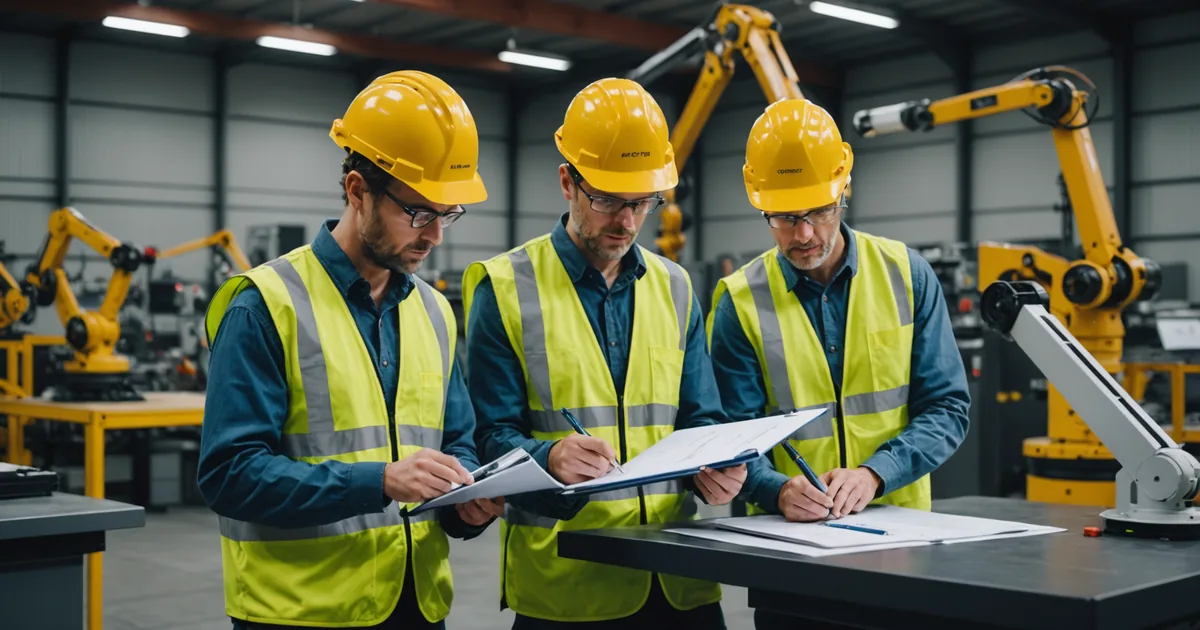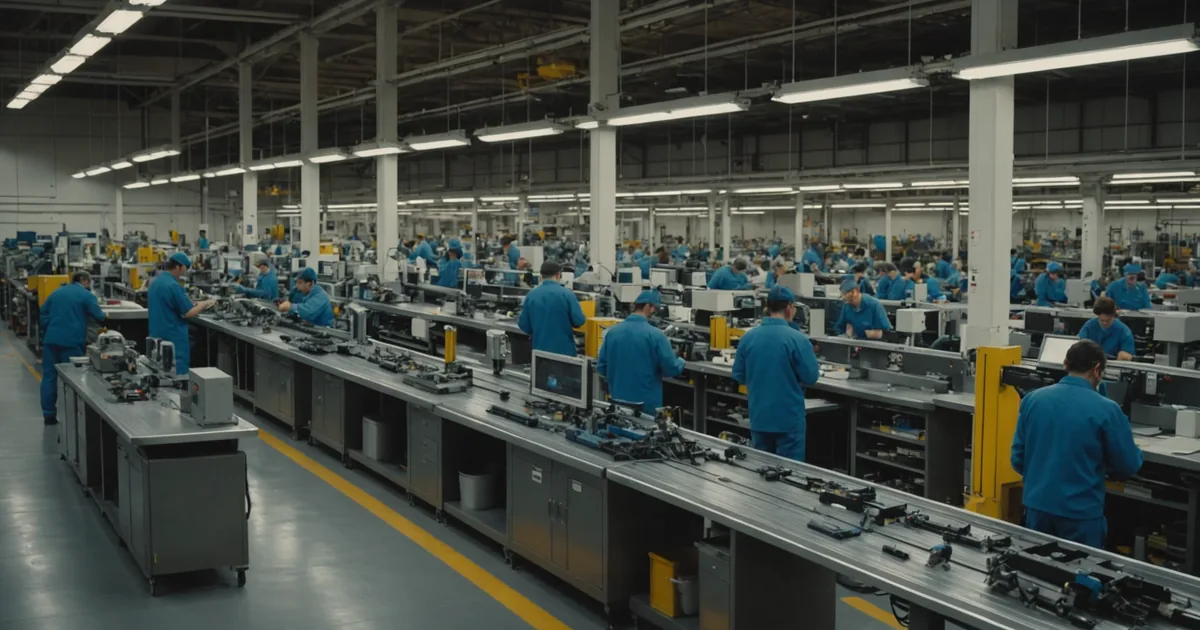
When we were deciding where to base Walden Robotics, the question was not about startup ecosystem, real estate cost, or which city has the most robotics talent on LinkedIn. The question was: where can we get to a real production line in 30 minutes and be standing on the floor with our arm by afternoon? The answer to that question is the Detroit metro area, and that is where we are.
I want to explain what this decision actually means for how we build the product, because I think it is commonly misunderstood when technology companies talk about being "close to customers." Close in the sense we mean is not quarterly site visits or a reference customer relationship. It means the difference between building software that looks correct in a test fixture and building software that works under actual plant floor conditions. Those are different things, and the distance between them is real.
What you see on a real floor that you do not see anywhere else
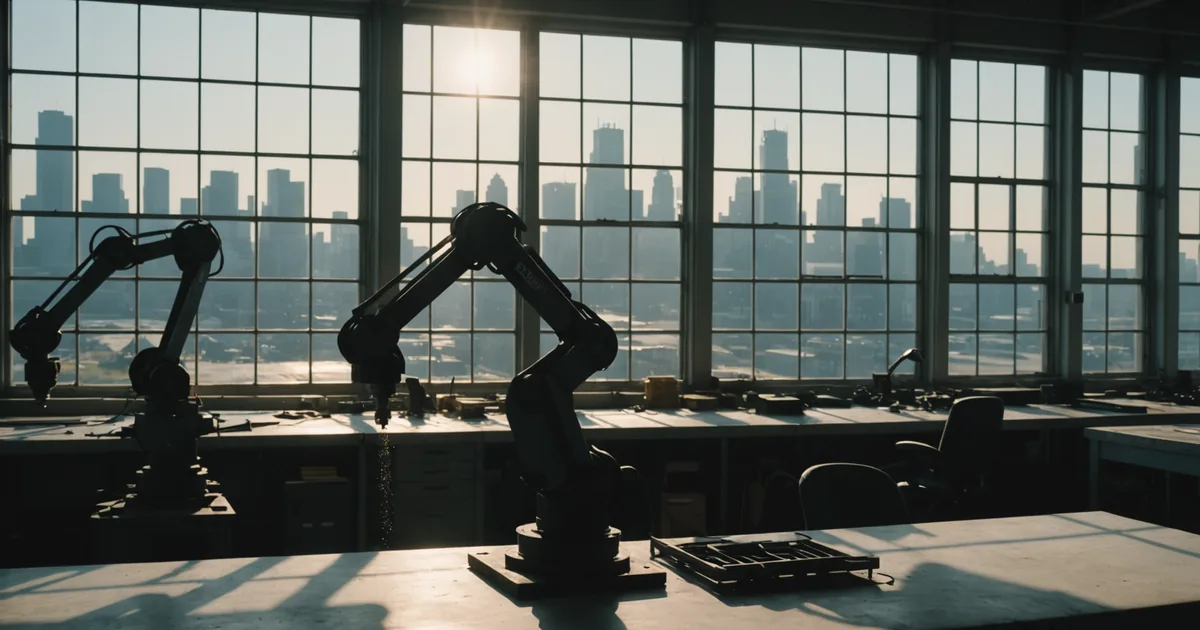
The floor of a Tier-2 or Tier-3 automotive supplier in the Detroit region is a specific environment. It has a specific electrical noise profile from induction heaters, press brakes, and welding equipment running on the same circuit as your arm. It has a specific ambient lighting situation: mixed sodium vapor and LED overhead, direct sunlight through roof panels at certain times of day, and occasional shadow from fork trucks moving between the robot station and the window. It has specific vibration from the building itself, from heavy stamping presses running 200 feet away.
The first time we ran our depth camera's part-pose estimation algorithm in a real facility, it failed in ways our lab testing had not predicted. The ambient lighting variation from a moving fork truck in the background created a shadow condition that fell exactly in the frequency range our edge detection was calibrated for. We had a false-positive edge detection event that caused the arm to misidentify the target surface. We had never seen that failure mode in testing because we had never been in the same building as a moving fork truck when running the algorithm.
You do not discover that kind of failure mode in a test lab. You discover it on a floor. The reason we were able to find and fix it quickly is that we were a 30-minute drive from that floor, not a two-day trip. We shipped a software update the next morning and tested the fix the same week.
The talent pool is a different kind of different
The region has a specific engineering culture that is useful for building this particular product. Controls engineers here grew up writing PLC ladder logic for industrial automation, not Python scripts for a startup's internal tooling. When we hire someone who has spent five years as a controls engineer at a mid-size stamping plant, they bring knowledge that we could not get from any other source: what a PLC program actually looks like in production, what an E-stop integration requirement actually means from a commissioning perspective, why certain Modbus TCP timing assumptions fail on certain PLC firmware versions.
That knowledge is only acquired on floors. It is not in textbooks. It is not adequately represented in academic robotics programs. It lives in the heads of people who have commissioned dozens of automation cells and debugged their own work at 2am before a Monday production start. That population is concentrated in this region in a way it is not concentrated anywhere else in the country for manufacturing automation.
This is not a claim that Detroit has superior engineers. It is a claim that the specific type of experience relevant to deploying collaborative arms in small-batch manufacturing facilities is disproportionately present here, in people who are currently working in that environment and can be reached without relocating from a different industry context.
What proximity does and does not give you
I want to be direct about what being in Detroit does not do. It does not substitute for hiring the right people. It does not mean our product works simply because we are nearby. And it does not give us any advantage in the computational robotics problems that are genuinely hard: motion planning, pose estimation under occlusion, grasp stability prediction. Those are hard regardless of where you sit, and being in Detroit does not make them easier.
What proximity gives you is the feedback loop speed. When a failure mode emerges in a production deployment, the time from observation to fix attempt is measured in hours rather than weeks. When a plant manager asks why the arm behaved a certain way in a corner case, we can watch the corner case in person rather than trying to reconstruct it from logs. When we want to test a change to the task teach workflow, we can take a pre-production unit to a plant floor and watch an actual line operator run through the teach sequence without any coaching from us.
That last one matters more than any other feedback mechanism we have. The gap between what a robotics engineer considers an intuitive interface and what a machinist with no computer science background considers intuitive is large. You cannot close that gap by imagining what the machinist will think. You close it by watching them. Doing that repeatedly, quickly, and cheaply requires being nearby.
The regional network is a product asset
There is a secondary benefit to the location that took us longer to appreciate. The Tier-2 and Tier-3 supplier community in southeast Michigan and northwest Ohio is a network. Plant managers and operations directors know each other. They go to the same industry events, they talk at the same trade groups, and they have informal channels where they share what is working and what is not.
When one of our early pilot sites has a good experience with a retask, that story travels organically in a way that a case study on our website does not replicate. When someone at a different facility asks their contact "have you seen this thing where the arm can switch tasks in an afternoon?" and gets a first-hand answer from someone who did it, the credibility of that answer is qualitatively different from marketing material. We cannot manufacture that network effect. We can only be present in the geography where it already exists.
The long-term bet
Manufacturing automation in the US is concentrated in specific geographic corridors: southeast Michigan and northwest Ohio, parts of the Carolinas, certain pockets in Texas and the Pacific Northwest. The facilities we are trying to serve are in those corridors. Building a company to serve them from a geography that is not in those corridors creates a structural gap between the product development environment and the deployment environment. That gap accumulates over time.
We are not saying the location decision is the most important thing about building an industrial robotics company. The product has to work. The business model has to work. The team has to be able to execute. But given a choice between building in a location that is close to our actual use environment and one that is not, we chose proximity, and we think that decision will compound in the product's quality over the next few years.
The measure will be whether our deployment track record on real plant floors reflects the advantage we believe proximity gives us. We expect it will. We will report back.