What It Does

Four tasks. One arm. Your team runs the changeover.

Pick-and-place, palletizing, assembly assist, and quality inspection. Retask between them without calling anyone outside your building.

4
Task types standard
< 4 hrs
Changeover time
0
Integrators needed
Pick and Place

Precise bin picks, structured or semi-structured.

The integrated depth camera builds a point cloud of the bin on every cycle. The arm picks parts from changing positions and orientations without fixture changes or pre-sorted input. Works on metal stampings, plastic housings, and machined components.

Typical cycle time: 3-8 seconds per pick depending on part size and travel distance. Handles batch-to-batch part variation without re-teaching when variation stays within the trained envelope.

Retask from pick-and-place to palletizing during a scheduled break. The same arm runs both tasks on the same shift if the line changes.
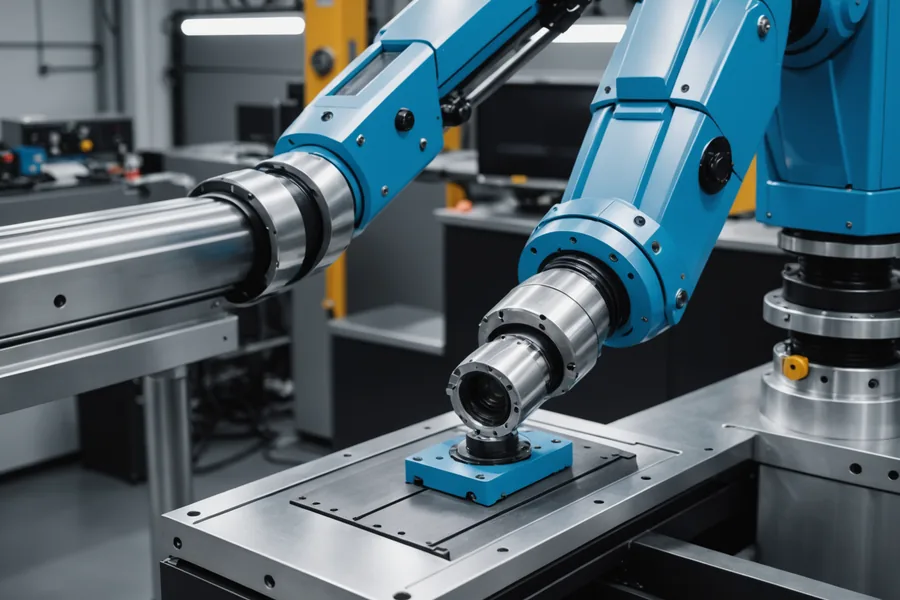
Robot arm picking a metal component from a parts bin at an automotive assembly station
Palletizing

End-of-line stacking when the product changes.

Teach a new pallet pattern in minutes: define layer count, orientation, and interleave spacing through the visual editor. The arm calculates approach angles and generates the stacking trajectory automatically.

Handles cartons, totes, and mixed-SKU layers up to 8 kg per pick. Runs at end-of-line without a fixed conveyor interface when product flow is consistent.

When a product changeover means a new box size, update the pallet pattern in the editor. No integrator call. No downtime past the teach session.
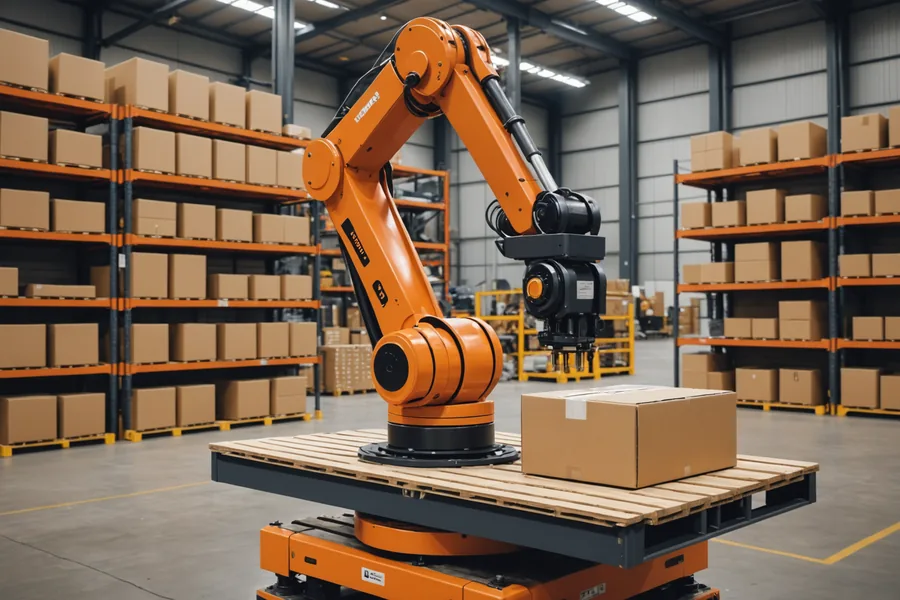
Robot arm stacking cartons onto a pallet in a warehouse distribution environment
Assembly Assist

Holds what needs holding. Works alongside your people.

In assembly assist mode the arm holds sub-assemblies, presents fasteners at the correct orientation, and stabilizes fixtures while a human worker closes, tightens, or inspects. Collaborative safety zone monitoring is always active.

Force-torque monitoring detects contact during the hold phase. If a human applies unexpected pressure the arm parks immediately. The collaborative envelope is configurable in the task editor, not hardwired.

Useful on low-volume builds where full automation does not make economic sense but manual holding tasks are creating ergonomic strain or cycle-time variance.
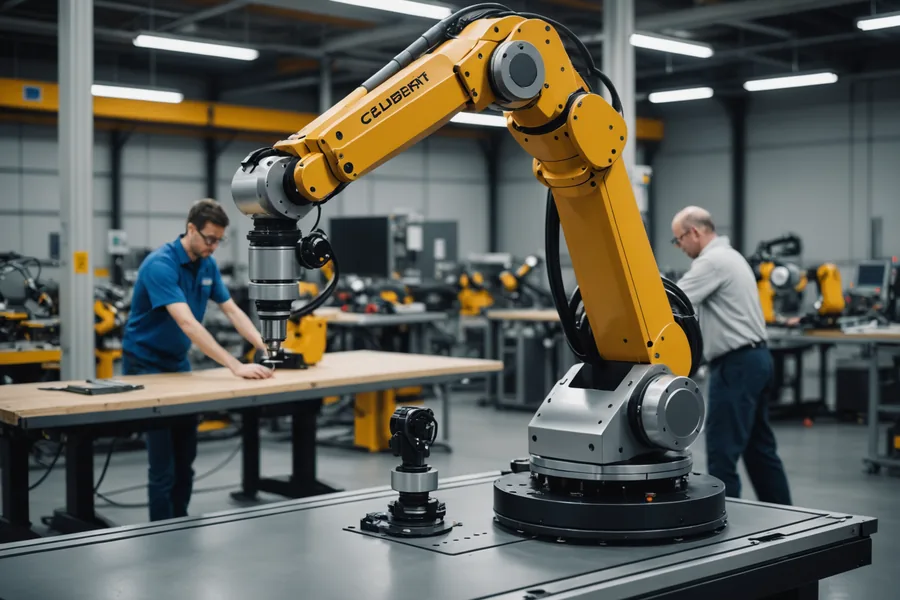
Robot arm assisting with component assembly alongside a human worker at a production table
Quality Inspection

Depth camera surface scan at line speed.

The integrated structured-light camera captures dimensional profiles of machined and formed parts. Inspection parameters are set during the teach session: scan path, tolerance bands, and flag criteria. The arm moves the camera over the part surface at a controlled traverse speed.

Flagged parts are set aside via a divert pick. Inspection data logs per-part to the connected controller via EtherNet/IP. No separate vision system or fixture-mounted camera required.

Useful after a CNC or pressing operation where dimensional conformance matters more than visual surface finish, and where a manual spot-check is the current process.
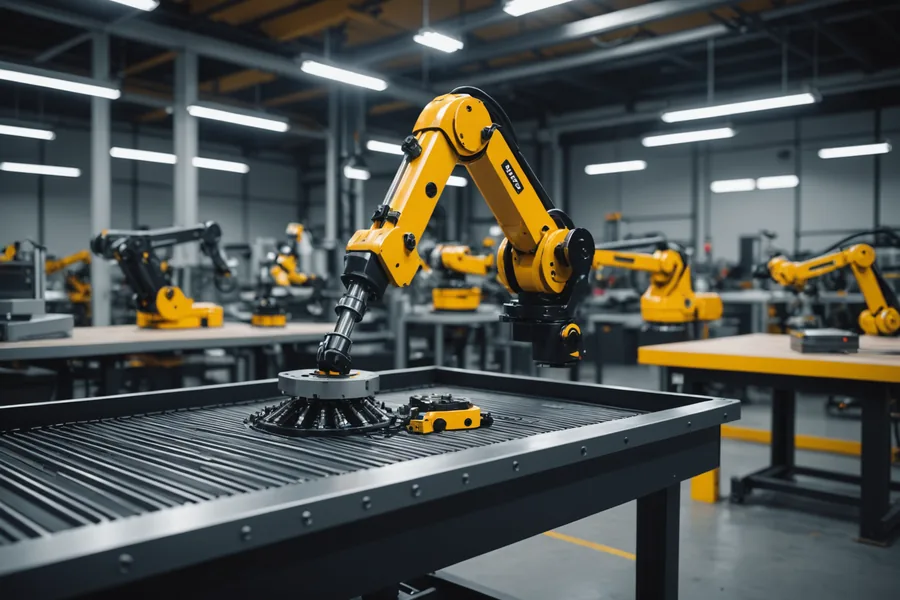
Robot arm with integrated depth camera scanning a row of machined parts for quality defects
Early-access pilot data

What changes when your team owns the retask.

Figures from 8 early-access sites, Q4 2025. Numbers reflect median results across all four task types.

Time to retask
3-6 weeks
3.5 hrs
Median across 8 pilot sites, Q4 2025. Traditional figure = industry benchmark for integrator-led cobot deployments.
Task success rate
Manual baseline
94%
Averaged across first production shift after retask, all task types, Q4 2025 pilot program.
Deployment footprint
Junction box + PLC cabinet
73% smaller
No junction boxes, no PLC cabinet, no external teach pendant. Q4 2025 pilots, compared to integrator-provided installation drawings.
Pilot case

Tier-2 supplier: two task types, one shift, no integrator.

A Midwest Tier-2 automotive parts supplier in the early-access program needed to switch the same station from palletizing finished cartons to pick-and-place of raw stampings when their production schedule shifted mid-week. The operations manager ran both teach sessions. Total changeover time across both tasks: under 4.5 hours.

No outside help. No downtime past the teach window. The arm ran both tasks on the same day.

2
Task types retasked in one shift
4.5 hrs
Total changeover for both tasks
$0
Integrator spend

See all four task types on your floor in one visit.

Request a Demo