Built in Detroit to fix a problem we watched happen for years.
Mid-size plants kept investing in robot arms and then watching them go idle every time the product line changed. The integrator model made flexibility expensive. We built a different arm.
Three engineers who have all been on both sides of this problem.
One side: plant floor operations where the arm sits idle. Other side: integration projects that took months and locked customers into a single configuration.
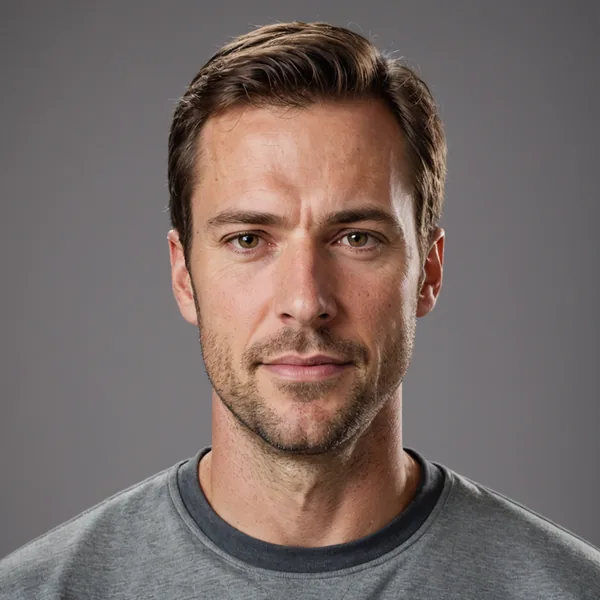
Years building motion control systems for precision manufacturing equipment at a Detroit-area industrial automation firm, then deployment project work at a robotics integrator. Spent most of those integrator years watching mid-size customers pay for flexibility they never got. Started Walden to change that.
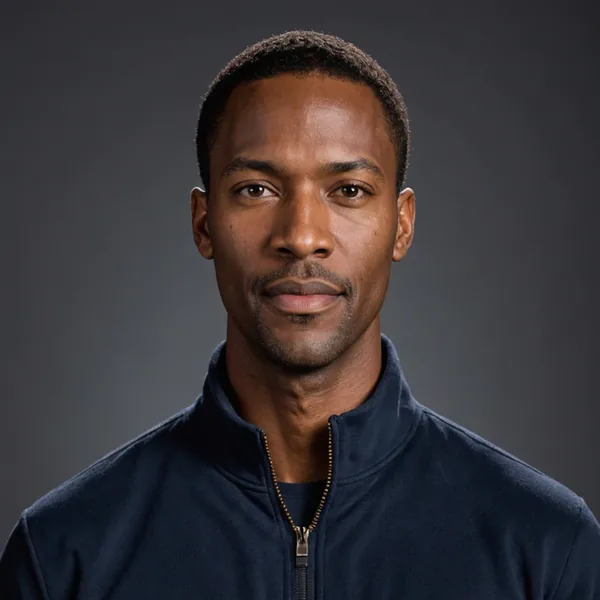
Robotic perception and sensor fusion work at the product engineering side of an industrial automation company, focused on the kind of structured-light depth sensing that makes unscripted part-picking possible on a factory floor. The on-arm depth camera and the teach-mode trajectory generation started with his work on that problem.

Spent years on manufacturing systems optimization at a Midwest Tier-1 supplier: lean line design, manual-to-semi-automated station transitions, and the kind of floor-level constraints that process engineers rarely document. Joined Walden after one too many conversations where she had to tell a plant manager that redeployment would take six weeks and cost six figures. Leads all commissioning and customer onboarding.
The problem we are solving is a Detroit problem first.
The auto industry runs on a two-speed cycle: major platform launches that justify large integration projects, and the hundreds of smaller product and process changes in between that do not. Mid-size suppliers fall in the middle. Too small for a dedicated integrator relationship. Too large to run everything manually. Those plants are the ones watching their arms go idle.
We built the hardware, the perception software, and the task editor here, with early-access customers we can visit in a day. The pilot program ran in facilities within two hours of this office. That proximity is not accidental. It is how you stay honest about what plant managers actually need.
Four principles that shaped every product decision.
Every teach system should assume the operator knows their parts better than any outside engineer does. Visual teach mode is designed for someone who has worked that station for three years, not someone who just read the spec sheet.
A robot arm that can only run one task forever is not flexible automation. Every arm ships with all four task types enabled. Retasking is the core function, not an add-on. The hardware was designed around this from the first sketch.
Collaborative safety zones, force-torque monitoring, and speed and separation monitoring are standard on every arm. The reason is not certification. The reason is that we install in plants with people, and a stop event that requires an engineer to diagnose costs production time. The system has to fail safely without external intervention.
Transparent hardware plus software pricing, no integrator markup, no separate commissioning invoice. If the total cost of deploying and retasking does not make sense for a 200-person supplier running mixed production, we have not done our job.
What early-access customers told us in Q4 2025.
We retasked from pick-and-place to palletizing in under four hours on a Tuesday. My team ran the entire teach session with a 15-minute orientation. That's the whole story.
We run mixed-SKU cartons through the same station three days a week. Before this we were manual every time the pallet pattern changed. The teach session for a new pattern now runs in about 90 minutes and my floor lead does it without calling anyone.
Talk to the team. We still take every first call ourselves.
Get in Touch