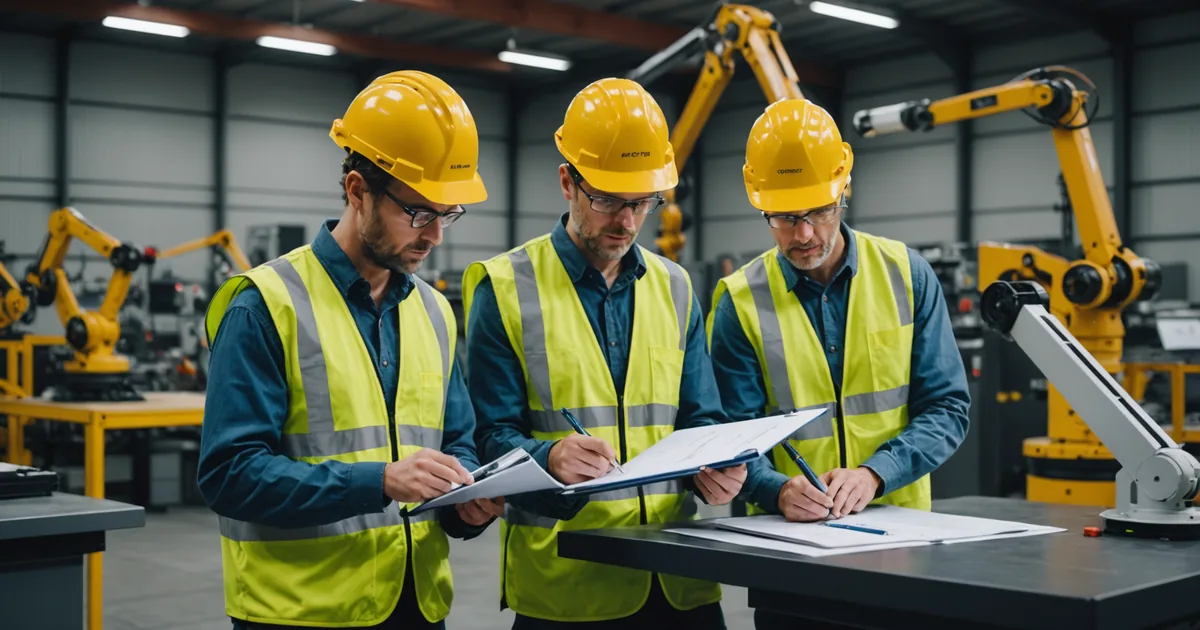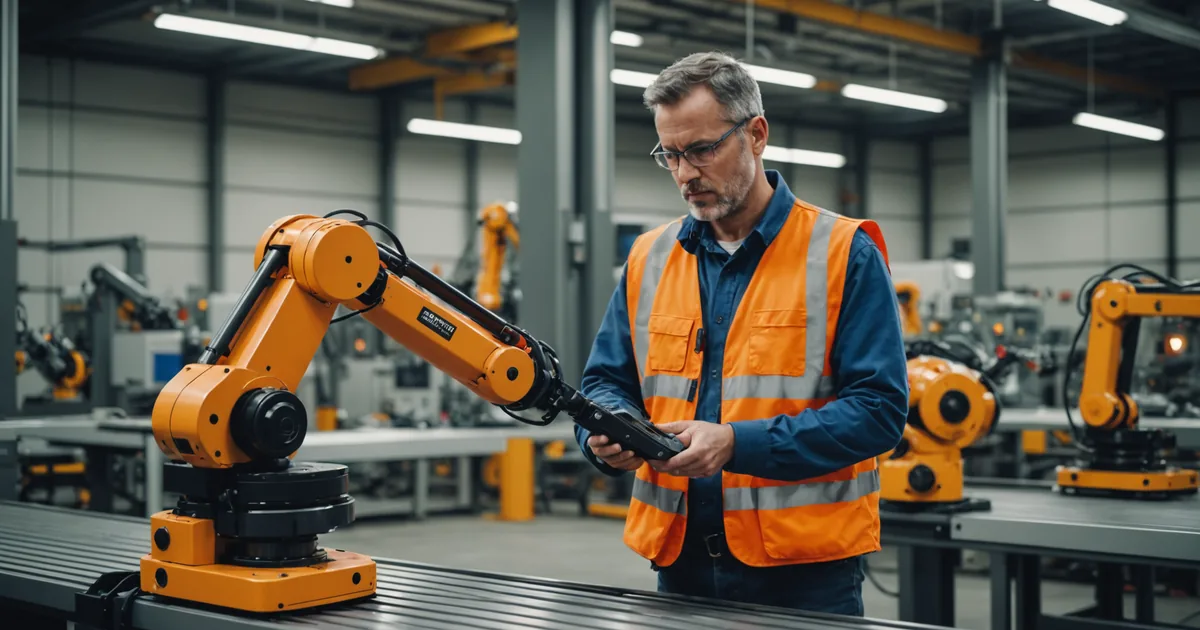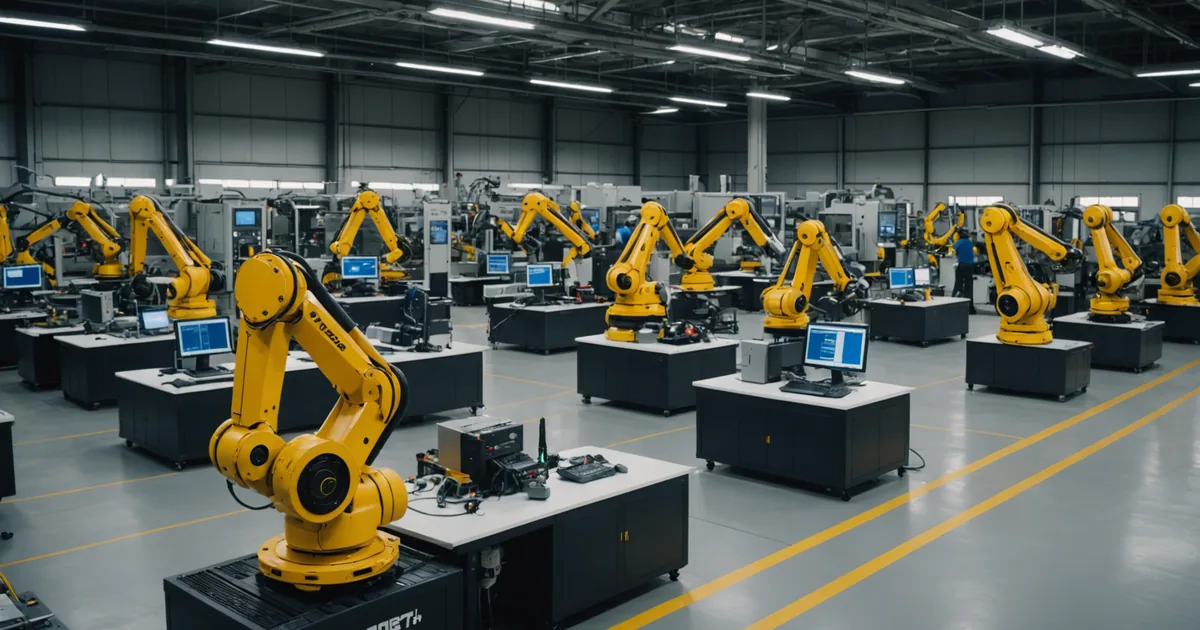
We ran eight early-access deployments over the past several months, across facilities in Michigan, Ohio, and Indiana, covering four task types: end-of-line palletizing, structured bin pick-and-place, assembly assist holding, and end-of-line orientation check and sort. We brought the arm to eight different floors, watched eight different operations teams do their first teach sessions, and recorded what worked, what broke, and what changed in how the plant managers thought about automation after the first retask.
This is a summary of what we learned. The findings that shaped our product direction are the ones worth sharing in detail. The ones that confirmed what we expected are worth noting but not worth dwelling on.
What we expected and got
We expected the teach session mechanics to work. The depth camera pose estimation, the waypoint confirmation workflow, the trajectory planner, the collision geometry sweep: these were the things we had spent the most engineering time on, and they performed close to specification across all eight sites. The average first teach session time for a 4-waypoint pick-and-place task was 38 minutes for a first-time operator. Our internal target had been under 45 minutes, so we were within spec.
We expected the PLC integration to be the part that varied most by site, and it was. Sites with existing Allen-Bradley CompactLogix PLCs went the fastest because the EtherNet/IP connection was well-documented territory for their in-house controls staff. Sites with older Modbus TCP setups took longer because the documentation on the existing PLC program was often out of date, and we had to trace the existing I/O logic before adding the arm's signal set. Average PLC integration time ranged from 30 minutes at the fastest site to 3.5 hours at the slowest.
We expected some sites to have cleaner stations than others. We did not fully anticipate how much a cluttered station would affect commissioning time. The worst case was a palletizing station at a small stamping plant that had a disused 2D barcode scanner and its associated cable management sitting in the arm's planned work envelope. Removing it and rerouting the cables took an hour. The depth camera then mapped the cleared station correctly in about four minutes. That hour would have been avoidable with the pre-deployment preparation checklist we now send out three weeks before arrival.
The finding that changed how we think about the product
The thing we did not fully anticipate was what happened at the sites that did their first retask within 30 days of deployment.
Six of the eight sites retasked the arm within the first month. Three of those retasks were planned (a known contract change was coming). Three were unplanned (a production schedule change made a second task economically attractive). All six retasks were completed by the plant's own staff with no on-site support from us, and all six went into production on the same day as the retask.
What changed after the first retask, at every one of those six sites, was how the plant manager characterized the arm in conversations with us afterward. Before the retask, the language was about productivity: "the arm does the palletizing so we can move that person to a different station." After the retask, the language shifted to flexibility: "the arm is the flexible station; we point it at whatever needs doing." That is a fundamentally different mental model of the asset, and it changes which stations they consider bringing the arm to next.
A plant manager who thinks of the arm as a productivity tool is optimizing the arm's utilization on a fixed task. A plant manager who thinks of the arm as a flexible resource is considering which tasks on the floor are candidates for the arm's next deployment and how quickly they could move it. The second mindset creates a completely different demand for the arm's capabilities over time, and it is the mindset we are building toward.
What broke and what we fixed
Three failure modes occurred in production that we had not fully characterized in pre-deployment testing.
Conveyor part presentation variation exceeding the correction envelope. At two sites running pick from a conveyor, we encountered situations where product arrived at the pick station with more lateral offset than the depth camera correction envelope had been configured to handle. In both cases, the arm issued a "part out of range" fault rather than attempting an out-of-envelope pick, which is the correct behavior, but the fault frequency was higher than the sites found acceptable. We updated the commissioning procedure to include a production variation characterization step: before sign-off, the operator intentionally presents parts at the extremes of the expected arrival variation range, and the correction envelope is set to cover that range plus a 20 percent margin. Both sites ran the updated commissioning procedure and the fault frequency dropped to near-zero in subsequent production.
Contact force spike on first pick after an idle period. At two sites, the arm showed elevated contact force on the first pick cycle after an idle period of more than 30 minutes (shift break, lunch stop). The subsequent cycles in the same session ran normally. The root cause was thermal settling in the arm's joint control loop: after an extended idle period, the first active joint motion had a slightly different response characteristic than the steady-state production motion. We added a 2-cycle warm-up sequence to the task start logic that runs the arm through the task at 30 percent speed before the first production cycle. The force spikes disappeared.
Depth camera performance degradation under direct afternoon sun. At one site, the structured-light depth camera's pose estimation reliability degraded on clear afternoons when direct sunlight through a south-facing roof panel fell on the pick surface. Structured-light sensors are sensitive to ambient infrared, and direct sunlight is a strong infrared source. We added a static infrared filter to the camera assembly specification after this finding and shipped updated units to the affected site. The filter is now standard in production units.
What we are building next, based on this
The early-access program surfaced three things we are prioritizing for the next software release.
First, a simplified retask preparation guide that the deployment lead can follow independently, covering the five pre-retask checks in sequence with visual confirmation at each step. The version they get now is accurate but assumes more familiarity with the system than a first-time solo retask operator has. We are building a guided version that requires no prior knowledge of the system.
Second, a task library management interface that makes it easy to see all stored tasks, their last-run date, and their commissioning parameters at a glance. Plant managers at the larger sites started building task libraries with four to six stored configurations, and the current interface was not designed for managing a library at that scale.
Third, a production data dashboard that surfaces the cycle-level perception data in a format that a plant manager can use without deep robotics knowledge. The data exists in the logs; making it accessible as a production metric (part presentation variation trending, force profile health, cycle time consistency) is a service the arm should provide rather than requiring the plant to pull it themselves.
We will publish results from the next cohort of sites in the first half of next year. If you are interested in being part of that cohort, the contact page is the place to start that conversation. We are currently booking site assessments for January and February deployments in the southeast Michigan and northwest Ohio corridor.