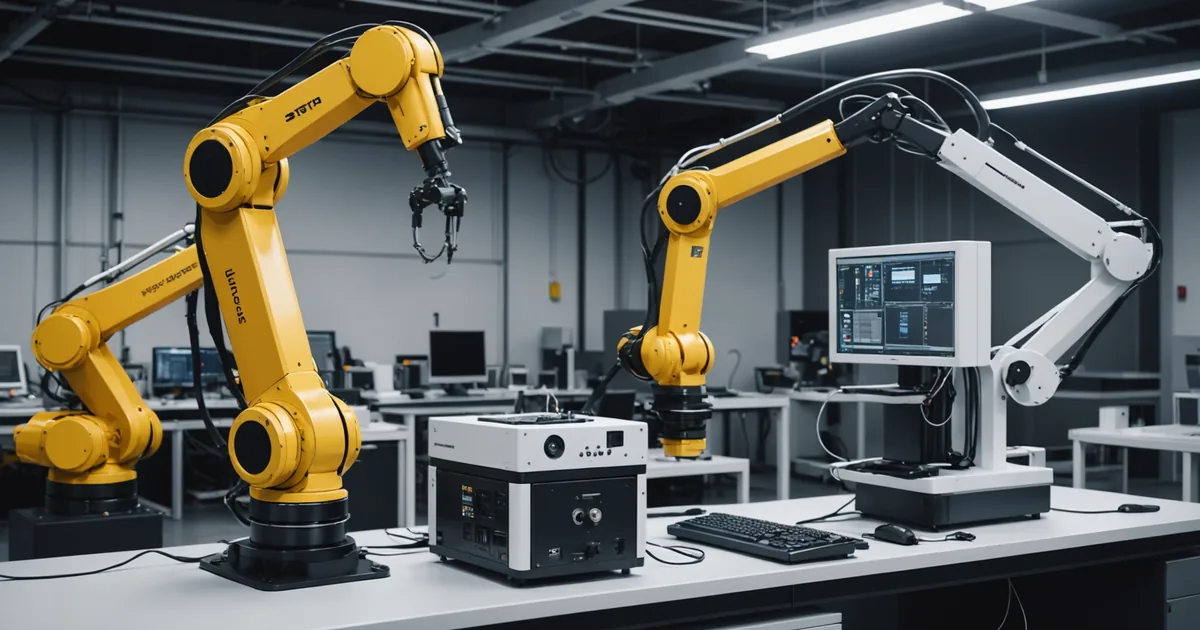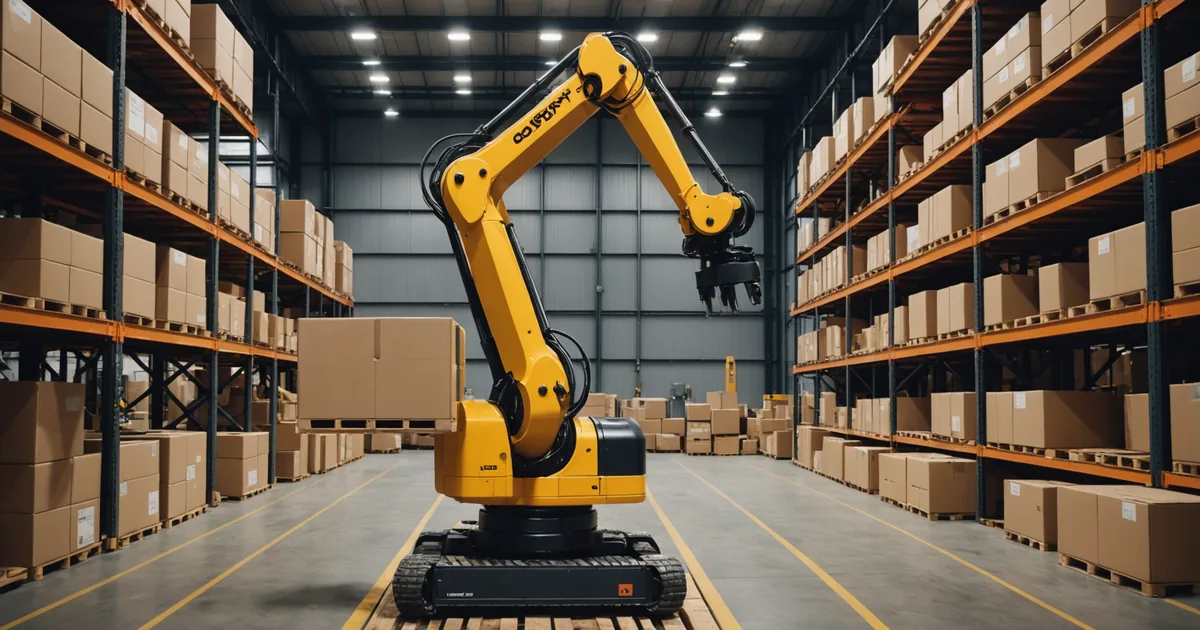
The scenario that comes up most often when we talk to 3PL operators: the arm is doing one task, a new contract comes in, and the contract requires a different task at the same station. In a traditional robot setup this is a reprogramming event. In our setup it is an afternoon. This is the case note from one of our early-access pilot sites that ran this exact transition.
The site is a regional 3PL distributor in southwest Ohio. They had been running end-of-line palletizing on the arm since their initial deployment: consumer goods cartons arriving at the end of a pick line, arm stacking to a 4x4 pallet grid, 8-second cycle, two shifts. The arm had run that task cleanly for about three months.
In mid-January they picked up a new inbound processing contract. Product was arriving in mixed cartons that needed to be broken down and redistributed into single-SKU totes for downstream picking. That is a different task type: incoming carton pick-and-sort rather than outbound palletizing. Same station footprint. Different gripper, different motion pattern, different placement targets. They asked whether the arm could handle both tasks and switch between them based on which contract was running on a given shift.
Task inventory: what the arm was storing before the retask
Before we started, the arm's task library had three entries: the main palletizing task (the active production task), a maintenance-mode slow-cycle version of the palletizing task used for troubleshooting, and a calibration-check task that runs the arm through a set of reference positions for the depth camera calibration verification. The new task would be the fourth entry.
The task library approach matters here: the arm can store multiple task configurations, and the active task can be selected either through the task editor software or through a task-select input from the PLC. For this site, we set up PLC task selection so that the line supervisor could switch the arm's active task from the control panel at shift start without opening the software interface on every cycle. The new task would be assigned task ID 4, and the PLC would output task ID 4 on the shifts running the inbound processing contract.
Gripper assessment and the swap decision
The palletizing task had been using a two-jaw parallel gripper with rubber pads suited to cardboard cartons. The inbound processing task needed to handle a mix of carton sizes ranging from small cosmetics boxes to larger FMCG cases. A two-jaw parallel gripper could handle both if the jaw travel range was adequate, but we would need to verify that the minimum jaw-open position was wide enough for the largest case without the rubber pads losing grip on the smallest box.
We tested the jaw travel against the actual product mix the site expected to see under the new contract. The range was workable for about 80 percent of the SKUs, but three SKU types at the large end of the range fell outside the reliable grip zone. The site had an adaptive three-finger unit in their tool crib that they had used on a previous manual-assist fixture. We tested that gripper against the full SKU range and it covered 97 percent of the mix reliably. For the remaining 3 percent (oversized flat packs), the line design had a manual bypass chute anyway, so the arm was not expected to handle them.
We swapped to the three-finger adaptive unit. Gripper swap with the quick-release coupling took about 9 minutes. Sensor calibration check after the swap took another 6 minutes.
Teaching the new task
The inbound processing task had more complex pick geometry than palletizing. Palletizing has a predictable pick from the end of a conveyor and a calculated place to a grid. The inbound task needed to pick from a mixed inbound carton (parts arriving in various orientations in a large bin) and place into one of six tote positions arranged in a 2x3 grid.
For the pick side, the arm's depth camera does real-time part-pose estimation to locate the top surface of each carton in the bin, regardless of orientation. We set the pick waypoints relative to the depth camera's detected surface plane rather than as absolute positions, which means the arm adjusts its pick approach on each cycle based on what it sees. This required teaching three approach waypoints (standard, left-leaning bin, and right-leaning bin) to cover the range of part presentations the camera might detect. The system selects the closest approach geometry based on the detected pose at each cycle start.
For the place side, the six tote positions were fixed and well-defined. We taught each tote slot as a named place target: tote-1 through tote-6. The task logic was configured so that the arm filled tote-1, then tote-2, through tote-6, and then signaled full-tote to the PLC. The PLC would then trigger a tote swap and reset the arm's place counter.
The full teach session for the new task took 2 hours and 20 minutes, including the three approach waypoints, six place targets, two confirmation cycles at 30 percent speed, and one final cycle at full speed before sign-off. The depth camera orientation at the bin approach was the part that needed the most care: we ran three calibration verifications during the teach session to confirm that the part-pose estimation was consistent across different bin fill levels.
PLC task-select integration
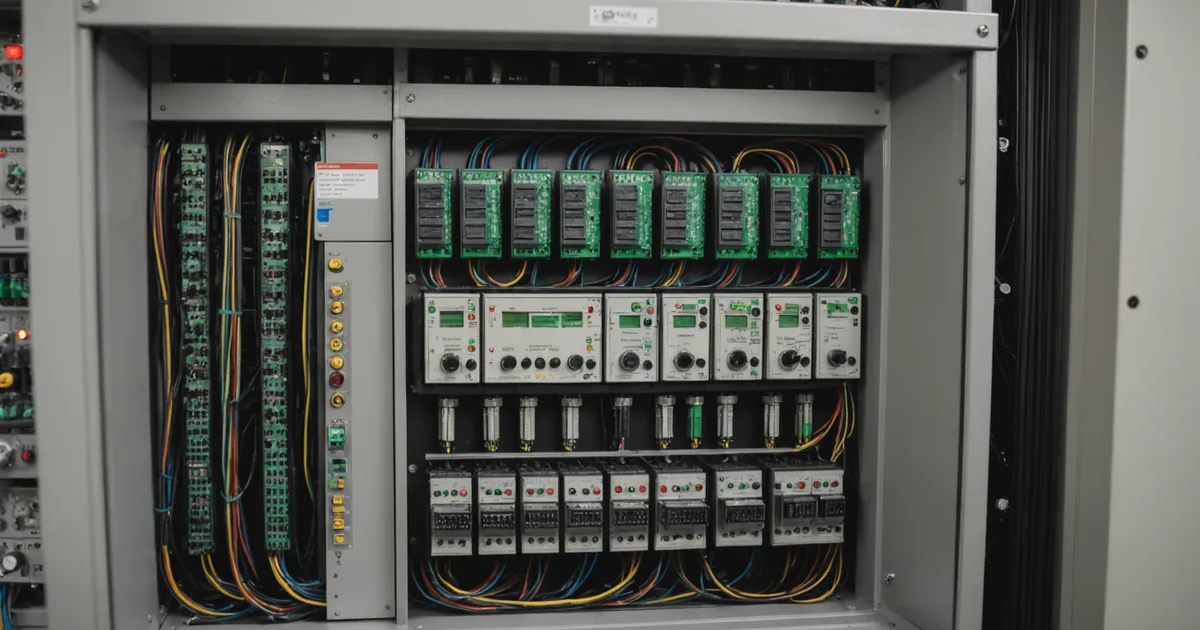
The task-select integration was the only part that required opening the PLC program. The site's existing PLC (an Allen-Bradley CompactLogix) had the arm's I/O tags already mapped from the initial deployment. We added two output bits to the arm's control assembly: task-select bit 0 and task-select bit 1. With two bits, the PLC could address four task IDs: 00 (palletizing), 01 (maintenance palletizing), 10 (calibration), 11 (inbound processing). We mapped the new task as ID 11 (both bits high).
In the PLC program, we added a task-select rung tied to the shift mode selector on the supervisor panel. When the shift selector is in "inbound" mode, both task-select bits are set high before the arm's ready-to-receive signal is checked at the start of each cycle. When in "palletizing" mode, both bits are low. The switch is confirmed by reading back the arm's active-task status register to verify the task ID loaded before the first cycle starts.
Total PLC modification time was about 45 minutes for someone familiar with Studio 5000 and the existing program structure.
First production run and what needed adjusting
The first production run on the inbound task ran for about 30 minutes before we had to stop and adjust one parameter. The bin-approach waypoint for the right-leaning presentation was generating higher-than-expected contact force on the gripper approach, just over the 12N threshold we had set for the approach segment. The arm was not faulting, but the contact force was high enough that we were concerned about cycle-to-cycle consistency on heavily loaded bins.
We increased the approach speed reduction margin for the right-leaning geometry from 15 percent to 30 percent, reducing the approach speed from 250mm/s to 175mm/s on that waypoint. The contact force dropped to 6 to 8N on subsequent cycles. We ran another 20-cycle verification sequence, confirmed the force was within range across the full bin fill level range, and released the task back to production.
The task has been running in regular rotation since February, alternating with the palletizing task depending on the shift assignment. Actual outcomes depend on the specific SKU mix, bin fill patterns, and the condition of the gripper pads; validate on your own line before setting production throughput targets based on these numbers.